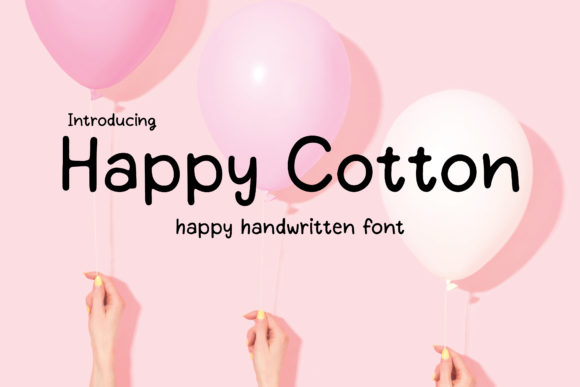
Happy Cotton: Elevate Your Designs with Whimsical Typography
Every designer knows the search for a font that feels both authentic and versatile can be a challenge. Happy Cotton is a sweet and friendly handwritten font that solves this with effortless charm. Its natural, unique style makes it incredibly fitting for a large pool of designs, offering a human touch that digital precision often lacks. The only limit is your imagination.
The Power of a Human Touch in Digital Design
In an era dominated by clean, geometric sans-serifs, a well-crafted handwritten typeface like Happy Cotton provides a vital counterbalance. It injects warmth, personality, and approachability into a visual identity. This font excels in creating an emotional connection with the audience, making it a powerful tool for branding and visual communication that aims to feel personal and genuine.
Its slightly irregular baselines and organic letterforms mimic natural handwriting, which can soften a brand's tone and make communications feel more heartfelt. This quality is particularly valuable in markets saturated with sterile, corporate aesthetics.
Practical Applications Across Creative Projects
The versatility of a friendly handwritten font extends across numerous design disciplines. Here’s how Happy Cotton can be integrated into your creative workflow:
- Branding & Logo Design: Ideal for businesses in lifestyle, food, beauty, or children's sectors. It creates an instant sense of friendliness and approachability in logos, wordmarks, and brand collateral.
- Marketing & Social Media Graphics: Perfect for quotes, call-to-action buttons, and promotional copy on Instagram stories, Facebook posts, and digital ads. It captures attention and boosts engagement by feeling less like an ad and more like a note from a friend.
- Packaging & Product Design: Adds artisanal charm to product labels, gift tags, and packaging inserts, enhancing the perceived value and care behind a product.
- Web & UI Design: When used sparingly, it can highlight key headings, testimonials, or special offers on a website, breaking up monotony and guiding the user's eye with visual interest.
- Editorial & Print Design: Brings life to magazine pull quotes, greeting cards, wedding invitations, and book covers, where a personal, crafted aesthetic is desired.
Tips for Effective Typography Selection and Use
Choosing and implementing a display font like Happy Cotton requires strategic thought to maintain professionalism and clarity. Consider these factors:
- Prioritize Readability: While stylistic, ensure the font remains legible at your intended size. Test it in various contexts—small on a business card, large on a billboard.
- Establish Visual Hierarchy: Pair it with a simple, clean sans-serif or serif for body text. Use Happy Cotton for headlines or accent text to create contrast and direct focus without overwhelming the viewer.
- Know Your Audience: This style resonates with audiences seeking authenticity and warmth. It may not align with brands projecting ultra-luxury or severe technical authority.
- Maintain Consistency: Integrate it as part of a defined typography system within your brand guidelines. Use it consistently for specific purposes (e.g., all social media quotes) to build recognition.
- Check Licensing & Scalability: Ensure the font's license covers all your intended uses (web, print, merchandise). Also, verify it scales well for both digital and physical applications.
Thoughtful design choices are the cornerstone of effective communication. Selecting the right creative assets, like a character-rich typeface, directly influences how a message is received and remembered. By carefully balancing aesthetic appeal with functional clarity, designers can craft visuals that not only look beautiful but also build trust, convey personality, and achieve strategic goals. Quality typography is not an expense; it's an investment in the coherence and impact of your visual narrative.